

Supporting Sensory, Emotional, and Social Development
A Parent‘s Guide to Choosing Safe and Effective Sensory Toys for Children on the Autism Spectrum
Introduction: Why the Right Toys Matter for Children with Asperger Syndrome
However, they may also face challenges with sensory processing, emotional regulation, and social communication. These are not failures of character or parenting. They are differences in how the brain processes information — differences that appropriate tools can help navigate.
The right toys can make a meaningful difference.
Toys designed with sensory needs in mind can help children with Asperger Syndrome:
-
Regulate their emotional state during moments of overwhelm
-
Develop fine motor skills through repetitive, purposeful play
-
Build social understanding through structured interaction
-
Channel repetitive behaviors into productive, calming activities
This guide is written for parents, caregivers, and professionals seeking safe, effective sensory toys — specifically silicone-based toys — for children on the autism spectrum. We will explore the characteristics of Asperger Syndrome, the types of toys that address specific needs, and why silicone is an exceptional material for sensory products.
Note on Terminology: The DSM-5 now classifies Asperger Syndrome under the broader diagnosis of Autism Spectrum Disorder (ASD). However, many parents, educators, and individuals still search for and identify with the term "Asperger Syndrome." This guide uses both terms to ensure parents can find the information they need, regardless of which terminology they prefer .
Part 1: Understanding Common Characteristics of Children with Asperger Syndrome
Before selecting toys, it is essential to understand the needs they are meant to address. Children with Asperger Syndrome (ASD Level 1) typically have average or above-average intelligence but experience specific challenges.

Sensory Processing Differences
Many children with Asperger Syndrome have atypical responses to sensory input. This can manifest in two opposite directions:
| Sensory Profile | Characteristics | Common Responses |
|---|---|---|
| Sensory Sensitive | Over-responsive to stimuli | Avoids loud noises, bright lights, certain textures; may cover ears or become distressed |
| Sensory Seeking | Under-responsive; craves input | Seeks out touch, pressure, movement; may spin, jump, or rub surfaces repeatedly |
A 2025 study on interactive sensory balls for children with ASD found that sensory processing difficulties directly impact classroom engagement, emotional regulation, and social outcomes . The same study demonstrated that targeted sensory tools can improve self-regulation and teacher support when used appropriately .
Repetitive Behaviors and Special Interests
Repetitive behaviors (sometimes called "stimming") serve important functions:
-
Self-regulation: Rhythmic movements help calm an overwhelmed nervous system
-
Focus: Repetitive action can block out distracting environmental stimuli
-
Expression: Hand-flapping or rocking may communicate excitement or distress
Research from 2007 (still cited in current literature) found that highly preferred sensory-stimulating toys were associated with more solitary play and problem behavior, while moderately preferred developmentally-oriented toys produced the most interactive play .
Implication for toy selection: Do not assume that a child‘s favorite sensory toy is always the best choice for social or learning contexts. Moderately preferred toys may better support skill development.
Emotional Regulation Challenges
Children with Asperger Syndrome may experience:
-
Anxiety about unexpected changes or social situations
-
Meltdowns — not tantrums, but neurological overload requiring recovery
-
Difficulty identifying and naming emotions (alexithymia)
-
Intense reactions to perceived criticism or failure
Recent research on interactive technology for ASD children emphasizes that sensory relaxation is a prerequisite for communication. One study found that once children with autism felt relaxed by and engaged with interactive soft toys, they “start feeling comfortable about the situation and become open to various external stimulations“ .
Social Communication Differences
Common social characteristics include:
-
Difficulty reading non-verbal cues (facial expressions, body language)
-
Less frequent eye contact (not disinterest — different neurology)
-
Preference for direct, literal language over metaphor or sarcasm
-
Challenges with turn-taking and sharing in play
Exceptional Strengths
These challenges exist alongside genuine strengths that toys can celebrate:
-
Deep focus on topics of interest
-
Excellent long-term memory for facts and details
-
Pattern recognition and systematic thinking
-
Honesty and directness in communication
Mattel‘s 2026 release of the first autism-representation Barbie — developed over 18 months in collaboration with the Autistic Self Advocacy Network — reflects growing recognition of autism‘s diverse presentations and the importance of inclusive design .
Part 2: Best Silicone Toys for Different Developmental Needs

For Sensory Regulation
Target skill: Reducing anxiety, providing predictable tactile feedback, promoting calm
Recommended toys:
-
Silicone Pop-It toys (reusable fidget poppers)
-
Textured silicone sensory discs (bumpy, ribbed, or smooth surfaces)
-
Silicone bubble sensory boards
Why they work: The repetitive action of pressing bubbles provides predictable, satisfying feedback. The soft silicone texture is gentle on sensitive fingers. A 2024 study in the Journal of Positive Behavior Interventions found that the provision of fidget toys did not negatively affect story detail acquisition for elementary students with autism, despite potential decreases in visual attention to the reading itself .
What this means: Fidget toys can be used during listening tasks (story time, lectures) without harming information retention — though parents may need to accept that the child‘s eyes are not always on the speaker.
For Fine Motor Skills
Target skill: Hand strength, finger dexterity, hand-eye coordination
Recommended toys:
-
Silicone building blocks (soft, stackable, interlocking)
-
Silicone beads for lacing
-
Textured silicone balls for gripping and squeezing
The Dave Octopus prototype, developed in 2025 specifically for children with Asperger Syndrome, incorporates pressable buttons that trigger LED lights and melodies — helping children associate colors and sounds with emotions while building fine motor control .
For Emotional Self-Regulation
Target skill: Stress release, calming during meltdowns, identifying emotions
Recommended toys:
-
Squeezable silicone stress balls
-
Silicone fidget cubes with multiple tactile surfaces
-
Emotion-themed silicone toys (e.g., octopus with tentacles for different feelings)
Research from the ACM PETRA conference (2023) found that augmented toys with sound and light feedback provide richer sensory stimuli than traditional toys — while noting that such toys must be designed carefully to avoid over-stimulation .
The Dave Octopus design is particularly notable: each of six tentacles corresponds to a different emotion. By pressing a button, children trigger a specific LED light and hear a corresponding melody, helping them “associate colors and sounds with their feelings” and providing “a non-threatening space for emotional expression” .
For Focus and Attention
Target skill: Sustaining attention during seated tasks, blocking distractions
Recommended toys:
-
Silicone fidget strips (adhesive-backed for desks or tablets)
-
Silicone sensory rings (wearable, discreet)
-
Small silicone poppers (pocket-sized)
The 2024 fidget toy study offers important guidance: fidget toys may decrease visual attention to a primary task without harming information acquisition . This suggests they can be useful for listening-based learning (lectures, audiobooks, story time) but may be counterproductive for visually-demanding tasks (reading, worksheets, screen work).
For Social Skills Development
Target skill: Turn-taking, sharing, cooperative play, communication
Recommended toys:
-
Interactive sensory games requiring two players
-
Silicone building sets for collaborative construction
-
Cause-and-effect sensory toys (press, squeeze, or pull to produce sound/light)
Research comparing toy types found that developmentally oriented toys that were moderately preferred produced the most interactive play and the least problem behavior, while highly preferred sensory-stimulating items were associated with more solitary play .
Practical takeaway: For social play scenarios, choose toys that the child likes but does not obsess over — this creates motivation to share without the anxiety of protecting a “special“ item.
For Oral Sensory Needs
Target skill: Safe chewing input for sensory seekers who mouth objects
Recommended toys:
-
Silicone chewable jewelry (necklaces, bracelets — with breakaway safety clasps)
-
Silicone teether-style toys (for older children, not just babies)
-
Textured silicone tubes for chewing
Important safety note: Unlike hard plastic or wooden toys that can damage teeth, or fabric toys that harbor bacteria, food-grade silicone is non-porous, dishwasher-safe, and gentle on enamel. However, parents should inspect silicone chew toys regularly for tears or pieces breaking off .
Part 3: Benefits of Sensory Toys for Children with Asperger Syndrome
Reducing Anxiety
Sensory toys provide a predictable, controllable stimulus in an unpredictable world. When a child feels overwhelmed by environmental noise, lights, or social demands, focusing on a familiar fidget toy can create a “safety bubble.“ Research on interactive soft toys found that gentle tactile feedback helped children with autism calm down and become relaxed — and once relaxed, they became more open to external stimulation and communication .
Supporting Self-Regulation
Sensory toys give children a tool to manage their own emotional state without adult intervention. A child who feels a meltdown approaching can reach for a squeeze ball or pop-it, using repetitive action to discharge nervous energy.
Occupational therapy research emphasizes that deep touch pressure and repetitive sensory input have documented calming effects for children with autism — similar to the benefits of weighted blankets or compression clothing .
Improving Concentration
For many children with Asperger Syndrome, the problem is not lack of attention but attention that is easily captured by irrelevant stimuli. A fidget toy provides controlled stimulation that satisfies the sensory-seeking brain, freeing cognitive resources for the primary task.
As noted earlier, research confirms that fidget toy use does not impair learning of story details, even when visual attention to the instructor decreases .
Developing Fine Motor Skills
Many sensory toys require pinching, pressing, pulling, or squeezing — all movements that build hand strength and dexterity. These skills transfer to handwriting, buttoning clothes, using utensils, and other daily living activities.
Encouraging Independent Play
Children with Asperger Syndrome may struggle with unstructured time. A predictable sensory toy provides a script for solo play — reducing anxiety during transitions or waiting periods (doctor’s offices, restaurants, car rides).
Building Confidence
Mastery of a toy — learning how it works, discovering all its features — provides competence and control that may be lacking in social domains. This confidence can generalize to other areas.
Part 4: Why Silicone Toys Are an Excellent Choice for Autism

Soft and Gentle Touch
Silicone has a smooth, slightly grippy texture that is comfortable for children with tactile sensitivities. Unlike hard plastic or rough fabric, silicone does not feel abrasive. Unlike some rubbers, it does not have a strong odor.
Researchers designing interactive toys for autism specifically choose soft fabrics and silicone-like materials because “it is wonderful to touch and is mostly geared for baby and children projects“ .
Safe and Non-Toxic
High-quality silicone toys are:
-
BPA-free, phthalate-free, latex-free
-
Food-grade (safe for mouthing)
-
FDA-compliant and LFGB-certified (EU standard)
For children who mouth objects for sensory input, this is essential. As the study on “Designing Interactive Soft Toys for Children with Autism” notes, material safety is the first consideration when designing for children who may have atypical play patterns .
Durable and Long-Lasting
Children with Asperger Syndrome may engage in repetitive, high-intensity play — squeezing, pulling, twisting, dropping, throwing. Silicone is:
-
Tear-resistant (unlike fabric)
-
Shock-absorbing (won‘t crack like hard plastic)
-
Weather-resistant (can be used outdoors)
Easy to Clean
This is crucial for families dealing with immune issues, allergies, or simply busy lives.
| Cleaning Method | Silicone | Fabric/Stuffed Toys | Hard Plastic |
|---|---|---|---|
| Dishwasher (top rack) | ✓ Safe | ✗ Not safe | ✓ Safe (some) |
| Boiling water sterilization | ✓ Safe | ✗ Destroys | ✗ Warps |
| Wipe with disinfectant | ✓ Safe | ✗ Absorbs chemicals | ✓ Safe |
| Machine wash | ✗ Not needed | ✓ Possible | ✗ Not needed |
One study on interactive sensory toys specifically praised materials that are “easy for parents or caregivers to maintain the quality” — recognizing that practical maintenance is a real concern for families .
Quiet Sensory Feedback
Silicone toys can be completely silent (unlike plastic fidget spinners or metal poppers). For children with auditory sensitivities, or for use in classrooms and quiet spaces, this is a significant advantage.
When the ACM study on augmented toys incorporated sound and vibration as feedback mechanisms, they carefully designed these outputs to be gentle and non-startling — recognizing that unexpected loud noises can be distressing for children with ASD .
Suitable for Multiple Sensory Needs
A single silicone toy can provide:
-
Tactile input (textured surfaces, smooth vs. bumpy)
-
Proprioceptive input (squeezing, pulling, stretching)
-
Oral input (chewing, if designated safe for that use)
-
Visual input (bright colors, translucence)
This versatility means one well-designed toy can address multiple sensory needs — simplifying the parent‘s toolkit and reducing the number of items to track and clean.
Part 5: How to Choose the Right Sensory Toy
Consider the Child‘s Sensory Profile
| If the child is... | Choose toys that are... |
|---|---|
| Sensory sensitive | Smooth, predictable, quiet, with optional soft textures. Avoid bright lights or unexpected sounds unless the child can control them. |
| Sensory seeking | Highly textured, squeezable, stretchy, with cause-and-effect feedback (lights, gentle sounds). |
Match Toys to Development Goals
| Goal | Suggested Toy Features |
|---|---|
| Emotional regulation | Squeezable, portable, discreet; can be used without leaving the desk or table |
| Focus / attention | Low-profile, silent, operable with one hand (e.g., fidget ring or small popper) |
| Fine motor skills | Requires pinching, pulling, twisting, or threading |
| Social interaction | Requires two players, turn-taking, or collaborative construction |
| Oral sensory needs | Food-grade silicone, dishwasher-safe, no small detachable parts |
Prioritize Safety
The most important factor is material certification.
| Certification | What It Means | Why It Matters |
|---|---|---|
| Food-grade silicone | Safe for mouth contact | Child may chew or suck on toy |
| FDA compliance (US) | Meets US food contact standards | Legal requirement for products sold in US |
| LFGB certification (EU) | Stricter than FDA; includes sensory testing | Required for EU market |
| BPA-free, phthalate-free | No endocrine disruptors | Standard for reputable brands |
| CPSIA compliant (US) | Lead limits, small parts testing | Required for children‘s products |
Start Simple
Do not overwhelm the child with a dozen new toys at once. Introduce one or two items and observe how the child interacts with them. Does the toy seem calming or agitating? Does it increase focus or become a distraction?
The free operant preference assessment method — where children are given access to multiple toys and their natural play patterns are observed — remains the gold standard for identifying which toys will be most effective for a particular child .
Part 6: KEAN‘s Manufacturing Capabilities
As a specialized silicone product manufacturer, KEAN supports brands, retailers, and professionals seeking high-quality sensory toys for children with Asperger Syndrome and autism.

Advanced Silicone Molding Technology
KEAN utilizes precision liquid silicone injection molding to produce sensory toys with consistent texture, accurate dimensions, and smooth edges. This technology enables:
-
Complex geometries (pop-it bubbles, textured discs, interlocking blocks)
-
Multi-durometer designs (soft regions combined with firmer support structures)
-
Tight tolerances (essential for fidget toys with moving parts)
In-House Tooling Development
Unlike manufacturers who outsource mold making, KEAN maintains an in-house mold shop with experienced engineers. This reduces lead times and allows rapid iteration during product development — critical for brands testing new sensory toy concepts.
Strict Quality Control System
Every production batch undergoes:
-
Raw material verification (FDA/LFGB certificates, batch traceability)
-
In-process inspections (dimensional checks every hour)
-
Final AQL sampling (statistical quality assurance)
For children‘s products, KEAN can also coordinate third-party testing (SGS, TÜV, Intertek) for additional safety verification.

FDA & LFGB Material Compliance
KEAN‘s standard food-grade silicone meets:
-
FDA 21 CFR 177.2600 (US food contact)
-
LFGB (German food and feed code)
-
EU 10/2011 (European food contact)
-
REACH, RoHS (chemical compliance)
-
BPA-free, phthalate-free, latex-free
Test reports are available for all certifications.
Low MOQ and Flexible Production
| Order Type | MOQ | Best For |
|---|---|---|
| Stock product (neutral packaging) | 1,000 units | Market testing, small brands |
| Custom color only | 3,000 units per color | Brand identity without new mold |
| Custom mold + color + logo | 5,000 units | Full private label |
| Complex OEM (new design) | Negotiable | Established brands |
Global Logistics Support
KEAN ships worldwide with flexible options:
-
DDP (Delivered Duty Paid): Single all-inclusive landed cost — no surprise tariffs
-
FOB, EXW, DAP available based on buyer preference
-
Amazon FBA ready: Labeling, palletization, carrier compliance support
-
Air freight: 3–12 days for urgent orders
-
Ocean freight: 25–50 days for cost-effective large orders
 OEM / ODM / Private Label Solutions
KEAN supports brands at any stage:
-
OEM (Original Equipment Manufacturer): We manufacture to your design and specifications
-
ODM (Original Design Manufacturer): We help design and develop new products from concept
-
Private Label: Your logo, your colors, your packaging on our existing designs
Customization options include:
-
Any Pantone color (mixed into silicone — not painted)
-
Embossed, debossed, or silk-screen logos
-
Custom packaging (color boxes, hang tags, inserts)
-
Custom hardness (20–80 Shore A) for different sensory needs
KEAN Recommended Sensory Toy Products
| Product Category | Features | Developmental Focus |
|---|---|---|
| Silicone Pop Fidget Toys | Reusable popper bubbles, various shapes/sizes | Anxiety relief, focus training, repetitive behavior channeling |
| Silicone Sensory Boards | Multiple textures (bumps, ridges, smooth zones) | Tactile exploration, fine motor training |
| Silicone Chew Toys | Food-grade, durable, easy-clean | Oral sensory needs, safe alternative to clothing chewing |
| Textured Sensory Balls | Squeezable, grippy surfaces, various resistances | Hand strengthening, proprioceptive input |
| Silicone Stacking Toys | Soft, interlocking pieces | Problem-solving, hand-eye coordination, cause-effect learning |
| Custom Sensory Solutions | Tailored to specific therapeutic goals | Brands seeking differentiated products |

Why Global Brands Partner with KEAN
With extensive experience in silicone manufacturing, KEAN serves brands in the baby, pet, kitchen, travel, and therapeutic product categories.
Key capabilities:
-
Expertise in silicone sensory products — understanding of texture, durometer, and safety requirements for autism-focused toys
-
Food-grade materials with full certification — FDA, LFGB, BPA-free documentation provided
-
Custom design support — in-house engineering for color, logo, packaging, and hardness optimization
-
OEM & ODM services — from concept validation to mass production
-
Global compliance support — documentation packages for US, EU, and other markets
-
Low MOQ with flexible production — test the market before scaling
-
Consistent quality with third-party testing options — SGS, TÜV, Intertek available
Part 7: KEAN‘s Recommended Sensory Toy Products
[Product images and detailed specifications to be inserted by KEAN]
Silicone Pop Fidget Toys

-
Target skills: Anxiety relief, focus training, repetitive behavior channeling
-
Features: Reusable popper bubbles, various shapes and sizes
-
Material: Food-grade silicone, FDA/LFGB compliant
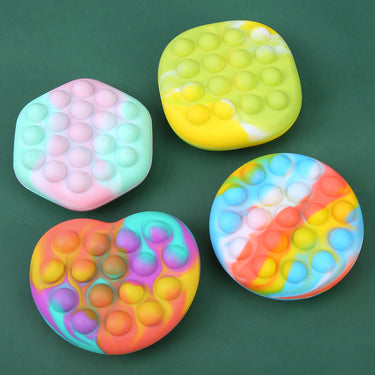
Silicone Sensory Boards
-
Target skills: Tactile exploration, fine motor training
-
Features: Multiple textures (bumps, ridges, smooth zones)
-
Material: Non-porous, easy-clean silicone
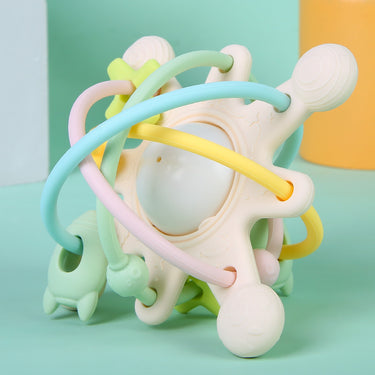
Silicone Chew Toys
-
Target skills: Oral sensory needs
-
Features: Durable, dishwasher-safe, no small detachable parts
-
Material: Food-grade silicone — safe for mouthing
Textured Sensory Balls

-
Target skills: Hand strengthening, proprioceptive input
-
Features: Squeezable, grippy surfaces, various resistances
-
Material: Silicone with integrated texture
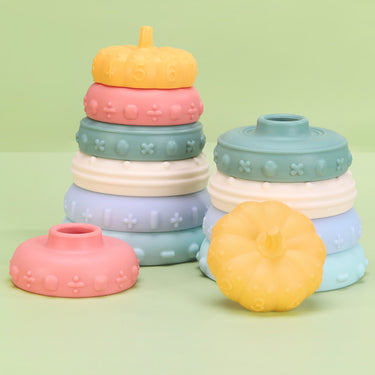
Silicone Stacking Toys
-
Target skills: Problem-solving, hand-eye coordination
-
Features: Soft, interlocking pieces, cause-and-effect learning
-
Material: BPA-free, phthalate-free
Custom Sensory Solutions
-
Target brands: Companies seeking differentiated sensory products
-
Features: Tailored to specific therapeutic goals
-
Support: OEM/ODM, custom colors, custom packaging
Part 8: Frequently Asked Questions (SEO)
What toys are best for children with Asperger syndrome?
The best toys address the child‘s specific sensory and developmental needs. For sensory regulation: silicone pop-its, textured discs, and squeeze balls. For fine motor skills: building blocks, lacing beads, and textured balls. For emotional regulation: squishy stress toys and emotion-themed silicone toys. Research suggests moderately preferred developmentally-oriented toys produce more interactive play than highly preferred sensory-only toys .
Are silicone sensory toys safe?
Yes — when made from 100% food-grade silicone with FDA or LFGB certification. Unlike hard plastic, silicone will not crack and create sharp edges. Unlike fabric, it does not harbor bacteria. Unlike some rubbers, it is latex-free and odorless. Always inspect silicone toys for tears or damage before use .
Can sensory toys help reduce anxiety?
Yes. Research on interactive soft toys found that gentle tactile feedback helped children with autism “calm down and become relaxed,“ and that once relaxed, they became “open to various external stimulations“ and more willing to communicate .
What toys improve focus in autistic children?
Fidget toys such as silicone poppers, fidget strips, and sensory rings can help. A 2024 study found that providing fidget toys did not negatively affect story detail acquisition for elementary students with autism, even when visual attention to the storybook decreased .
Practical application: Fidget toys may be appropriate during listening tasks (lectures, audiobooks, story time) but less helpful for visually demanding tasks (reading text, worksheets).
Are chew toys beneficial for sensory seekers?
Yes — for children who mouth objects for sensory input, silicone chew toys provide a safe, durable alternative to chewing on clothing, pencils, or unsafe objects. Choose food-grade silicone without small detachable parts. Inspect regularly for wear .
How do sensory toys support emotional regulation?
Sensory toys provide predictable, controllable stimulation during moments of overwhelm. The repetitive action of squeezing, pressing, or rubbing a silicone toy can discharge nervous energy and provide a “safety anchor“ when environmental stimuli become overwhelming.
What should parents look for in sensory toys?
| Priority | What to Look For |
|---|---|
| Safety | Food-grade silicone, FDA/LFGB certification, BPA-free, phthalate-free |
| Appropriateness | Matches the child‘s sensory profile (sensitive vs. seeking) |
| Durability | Tear-resistant, non-toxic when chewed |
| Cleanability | Dishwasher-safe or easily washed |
| Portability | Small enough for travel, school, doctor‘s waiting rooms |
Where can I find sensory toys for autism?
Sensory toys are available through occupational therapy suppliers, specialty autism retailers, and increasingly through mainstream toy brands. Mattel‘s 2026 release of an autism-representation Barbie — developed with the Autistic Self Advocacy Network — reflects growing mainstream recognition of the autism community‘s needs .
For brands and professionals seeking custom sensory products, KEAN offers OEM/ODM manufacturing with food-grade silicone certification.
Conclusion: The Right Toy Makes a Difference

Children with Asperger Syndrome are not broken or in need of “fixing.“ They experience the world differently — sometimes more intensely, sometimes more beautifully, always in their own unique way.
The right toys do not cure or change who they are. They provide tools for navigating a world not always designed for their needs — reducing anxiety, supporting focus, channeling energy, and creating moments of calm in otherwise overwhelming days.
Key takeaways for parents:
| Consideration | Recommendation |
|---|---|
| Material safety | Choose food-grade silicone with FDA/LFGB certification |
| Bristle/texture softness | Test against your own skin first; should feel comfortable, not scratchy |
| Age appropriateness | Newborns: hand/wipe only; infants 3-12 months: ultra-soft 1-2x/week; toddlers: 2-3x/week |
| Sensory profile | Sensitive children: smooth, predictable, quiet; seeking children: textured, squeezable with feedback |
| Goal alignment | Match toy features to specific developmental targets (regulation, focus, motor skills, social interaction) |
Silicone sensory toys — when chosen carefully and used appropriately — can be valuable tools for families navigating the joys and challenges of raising a child on the autism spectrum.
For brands, professionals, and retailers seeking high-quality sensory toys with verified safety certifications, KEAN offers manufacturing expertise, material traceability, global compliance support, and flexible production options.